
“This is one day a year where people in the Vietnamese community all gather together, and it’s a safe space for everyone.”
February 17, 2026
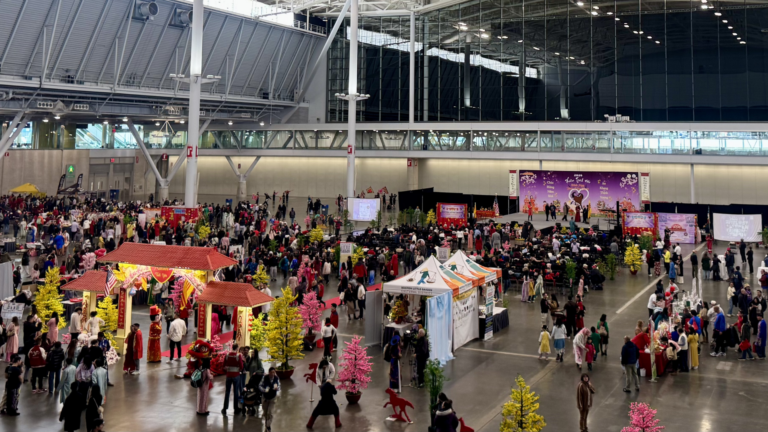
Hoi An lanterns hang sparsely throughout the venue. Dancers glide across the stage in silk tunics. Rows of Bánh Tét, Vietnamese rice cakes enjoyed during Lunar New Year, line display tables. And nearby, inflatable horses and a miniature stable invite children to pose for photos — fitting the Year of the Horse theme.
The Lunar New Year — known as Tết in Vietnam — is one of the most significant holidays across several Asian countries and among diaspora communities worldwide.
Organized by the Vietnamese American Community of Massachusetts and the New England Intercollegiate Vietnamese Student Association, Tết in Boston 2026 remains the region’s largest Vietnamese Lunar New Year festival. On Sunday, it filled the Menino Convention & Exhibition Center in South Boston, a space nearly the size of a football field, said Christina Trần, the festival’s decorations director.
For months leading up to the event, Trần and her decorations committee hosted weekend workshops to craft decorations and prepare the venue. The work, she said, created unique opportunities for connections.
“It has allowed a lot of people to come together, especially different generations,” she said, gesturing toward her decorations adviser, Khánh Bùi, who was born and raised in Vietnam.
Planning began last summer with selecting a new venue, said co-director Holly Nguyen. Although the festival is held annually, this was its first year at the Menino Center.
In previous years, the smaller spaces required a two-day format, but the larger venue allowed organizers to consolidate into a single day and opened the festival to more attendees, Nguyen said.
“This is one day a year where people in the Vietnamese community all gather together, and it’s a safe space for everyone,” said co-director Linda Pham. “It’s not only people of Vietnamese descent; people who are from different ethnicities [and] cultural backgrounds come here, and everyone is able to celebrate as one.”
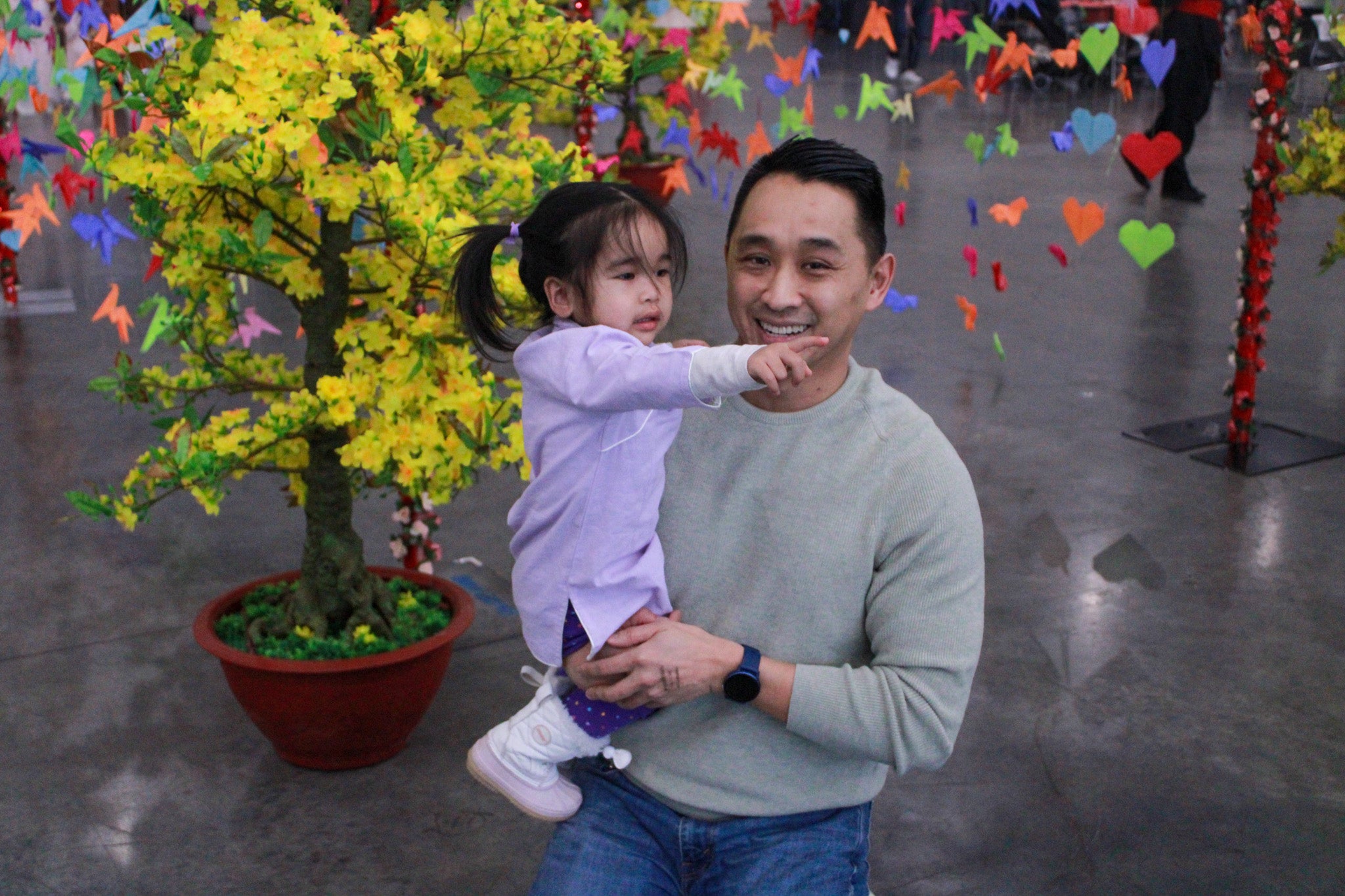
For attendees like Quang Vu Nguyen and his 2-year-old daughter, the festival offered a cultural connection.
“It’s more a culture show for our family,” he said. “Especially for my daughter growing up here, [it gives her] a taste of the culture of Vietnam back home.”
As a second-generation Vietnamese American whose parents immigrated to the United States, Nguyen said events like this are essential.
“You don’t get too many opportunities like this,” he said. “You could probably go a whole year and not go to any Vietnamese events, but I do think it’s important for [my daughter] to kind of see it, understand it, kind of just be immersed in it.”
Tết in Boston also showcased traditional Vietnamese arts.
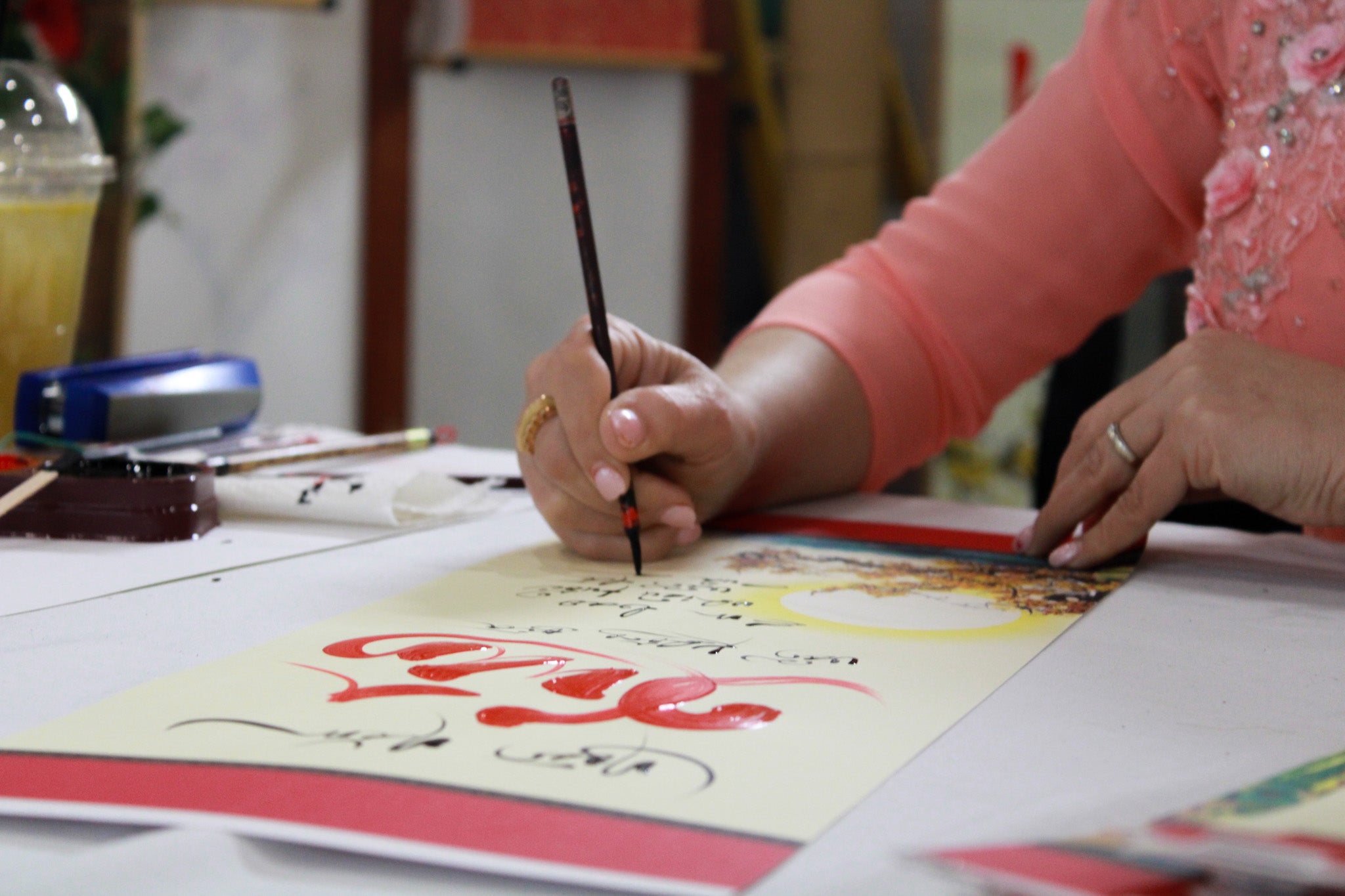
Trang Tran, a Boston resident, ran a calligraphy booth with help from her daughter, Thien Nguyen, who translated for her mother. In Vietnam, calligraphers traditionally sit along busy streets during the New Year, writing personalized poems and wishes for passersby, Nguyen explained.
“Culturally, it’s really important,” Nguyen said, pointing to her mother at work. “There’s fun stuff here like games and food, but we need something for the culture and art of the Vietnamese people.”
Vivian Le, a Massachusetts resident, displayed and sold Ao Dài, the traditional Vietnamese dresses worn during holidays, weddings, and formal celebrations. Some were handmade, while others were shipped from her family in Vietnam, she said.
Le said she attends the festival each year to “bring out the culture” through traditional dresses. She said this year’s event felt more connected than in the past — thanks to the larger, single-floor venue.
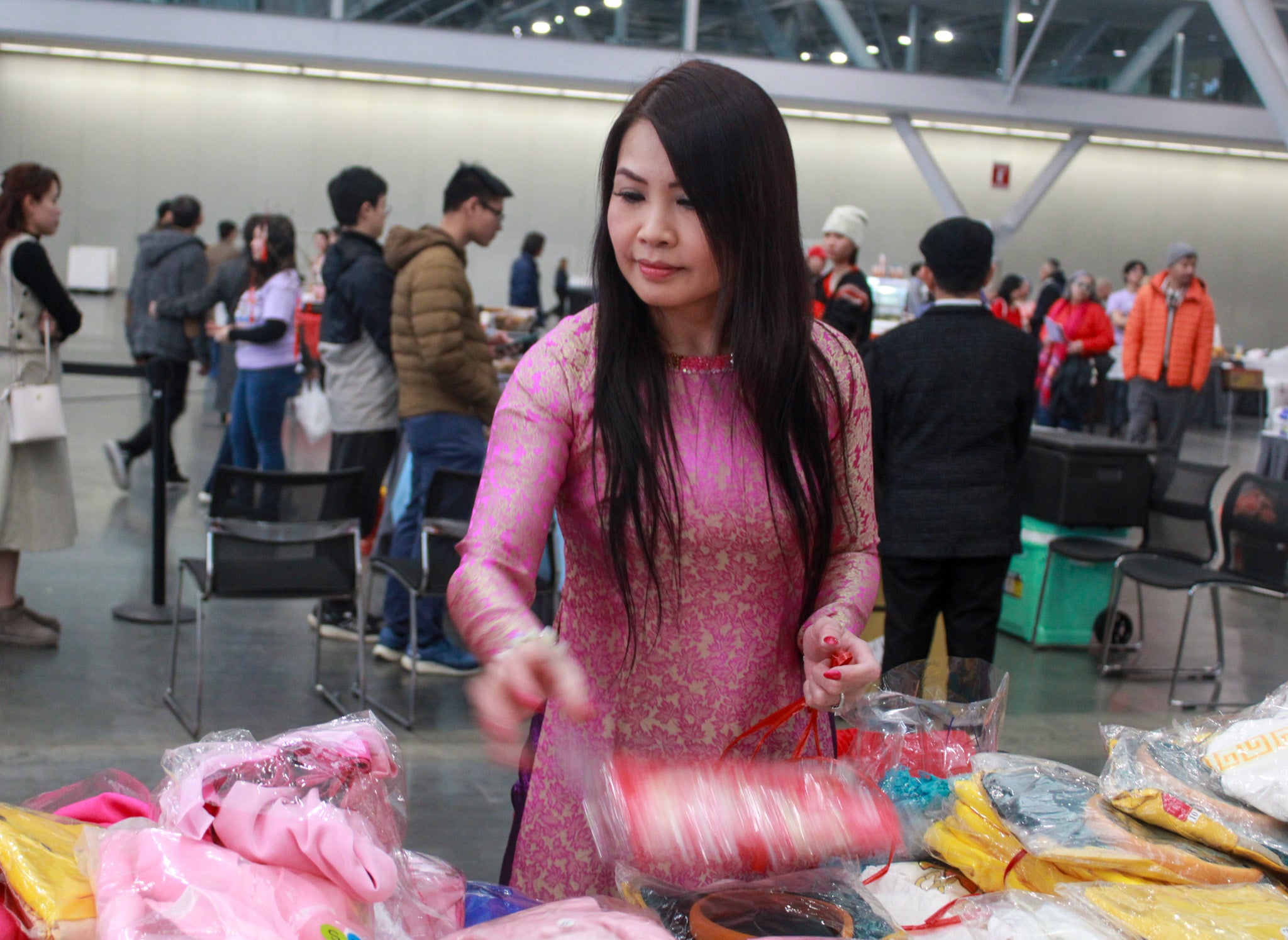
“This year, we are all together, all in one floor,” she said. “I really like it this year because it’s bigger.”
Students also participated, including UMass Boston’s Vietnamese Student Association.
Hao Truong, a senior at UMass Boston and vice president of VSA, said members hosted games for children and sold merchandise during the festival.
The group aims to promote Vietnamese culture both on campus and in surrounding neighborhoods like Dorchester. Within the Dorchester neighborhood, Boston’s Little Saigon district serves as a cultural and commercial hub — home to roughly 75% of the city’s Vietnamese American population.
For Truong, the event was also personal.
“I think it’s a good way for everybody just to get together, especially for New Year’s, which is all about family and connection,” Truong said.